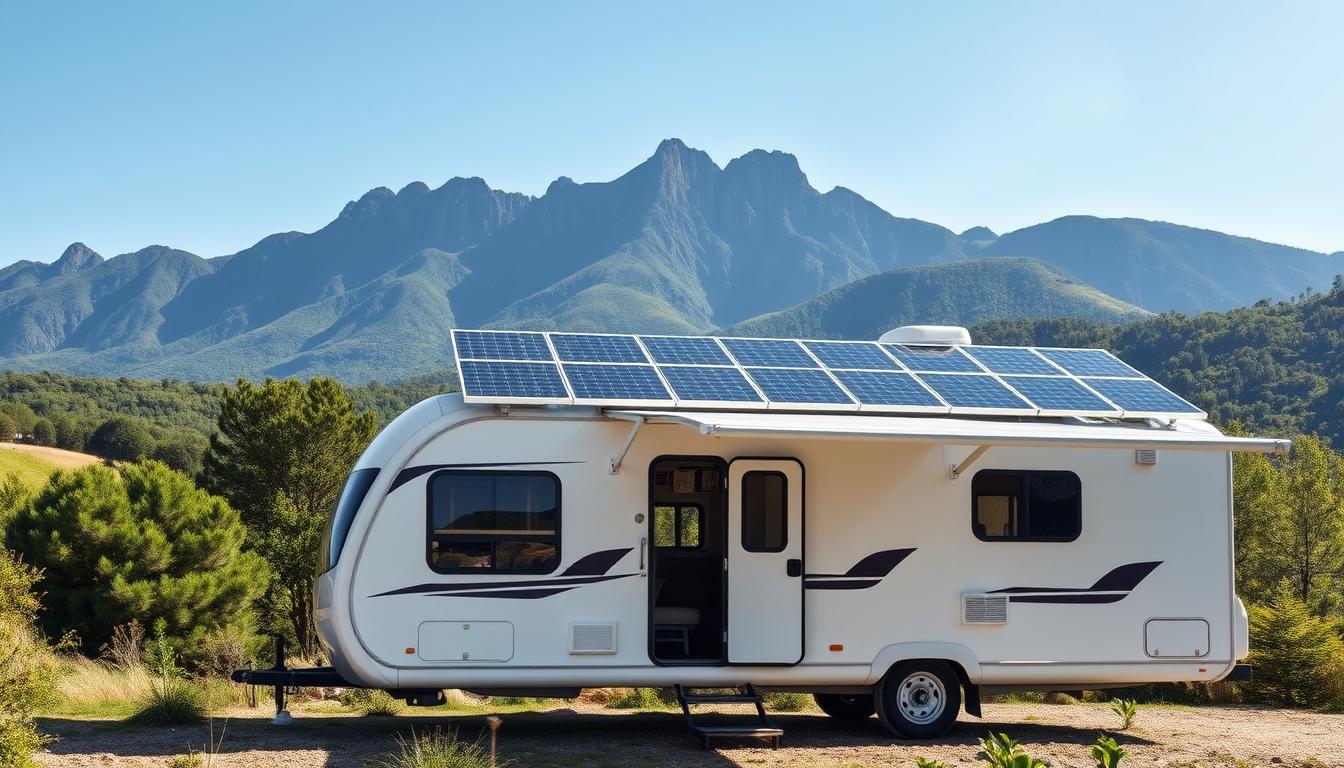
Power Your Mobil Home with a Reliable Solar System
A mobile home solar system is a smart choice for saving money and the planet. It’s becoming more popular as people choose sustainable living. This system gives you energy freedom and cuts down on using old energy sources.
Think about having energy whenever you need it, no matter where you are. A mobile home solar system makes this possible. It lets you live freely, away from the grid.
Key Takeaways
- Investing in a mobile home solar system can reduce your energy costs and carbon footprint
- A mobile home solar system provides energy independence and freedom to live off the grid
- Solar power is a reliable source of energy for mobile homes
- A mobile home solar system can increase your mobile home’s value
- Mobile home solar systems are a great way to reduce your reliance on traditional energy sources
Understanding Mobile Home Solar Systems: A Complete Overview
Choosing off-grid solar for mobile homes brings energy freedom and green living. These systems are made for mobile homes. They offer flexibility and work well.
What Makes Mobile Home Solar Different
Mobile home solar systems are not like regular home solar setups. They focus on being portable and using space wisely. They are light and simple to set up, fitting well in mobile homes’ small spaces.
Key Components of a Mobile Solar Setup
A typical mobile solar system has a few key parts:
- Solar Panels: They catch sunlight and turn it into electricity.
- Inverters: They change the DC power into AC power we can use.
- Battery Storage: They save extra energy for when it’s cloudy or dark.
- Charge Controllers: They control how much power goes to the batteries.
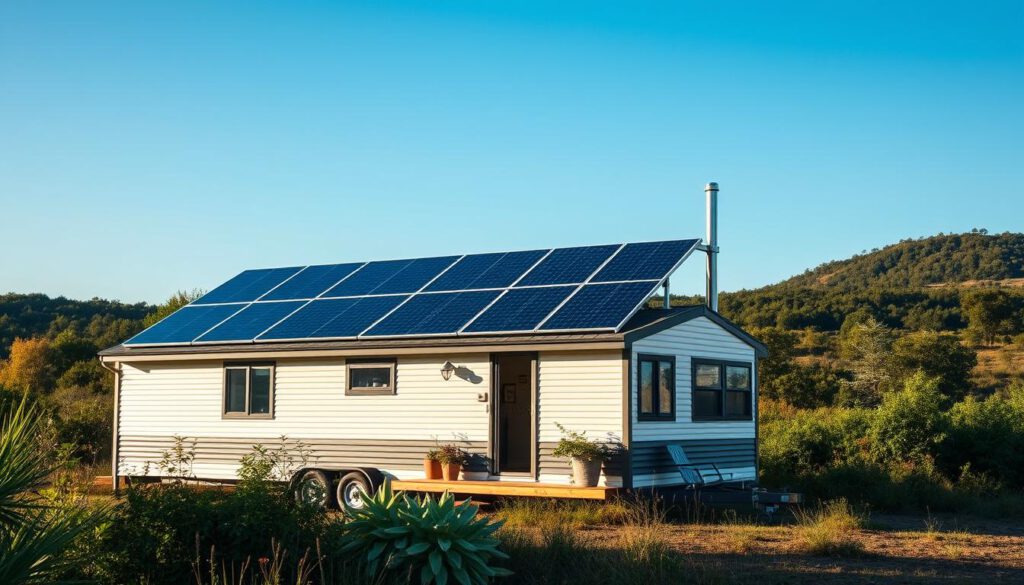
Power Generation Capabilities
The power of off-grid solar for mobile homes depends on the solar panels’ quality and size. It also depends on how much energy the home needs. Modern systems can power appliances, lights, and gadgets. They give a steady energy source, even in far-off places.
Benefits of Solar Power for Mobile Living
Choosing eco-friendly solar solutions for mobile living brings many benefits. Solar power lets you be energy independent. This means you don’t have to rely on traditional energy sources.
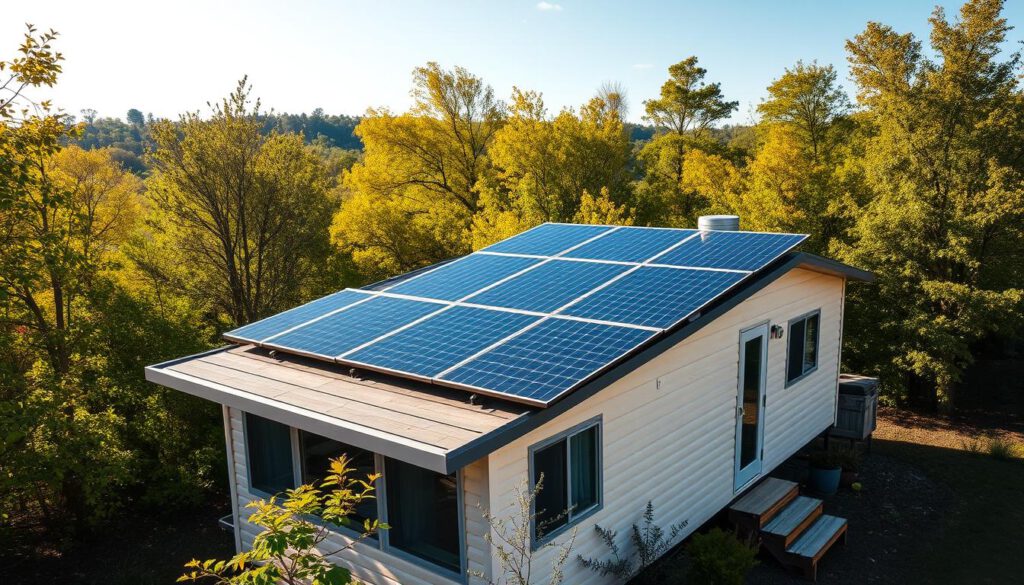
- Energy Independence: Make your own power anywhere, ensuring a steady energy supply.
- Cost Savings: Lower your energy bills by using free solar energy.
- Environmental Benefits: Reduce your carbon footprint by using renewable energy.
- Increased Property Value: Solar installations can make your mobile home more valuable.
Many travelers have saved a lot on their monthly bills after switching to solar power. They also enjoy the peace of mind that comes with sustainable living.
| Benefit | Description |
|---|---|
| Energy Independence | Free yourself from external power sources and enjoy autonomy. |
| Cost Savings | Reduce monthly energy expenses through solar energy. |
| Environmental Benefits | Minimize environmental impact by using clean energy. |
| Increased Property Value | Boost the market value of your mobile home with solar installations. |
Calculating Your Mobile Home’s Solar Power Needs
Figuring out the right solar system for your mobile home starts with knowing your energy needs. This step makes sure your system works well and reliably.
Energy Consumption Assessment
Start by making a list of all your daily electrical appliances. Write down each item’s wattage and how long you use it. This helps you figure out your daily energy use.
Solar Panel Size and Capacity
After knowing your energy needs, pick solar panels that can make enough power. Think about how much sunlight you get and how efficient the panels are. This will help you choose the right size and capacity for your system.
Battery Storage Requirements
Having the right battery storage is key for keeping power when it’s cloudy or dark. Figure out how much storage you need to support your energy use during these times. This ensures your system works well, even when it’s not sunny.
Types of Solar Panels Suitable for Mobile Homes
Choosing the right solar panel is key for powering your mobile home well. There are two main types: fixed and portable solar panels.
Fixed solar panels are mounted on your mobile home’s roof. They give a steady energy supply and are great for permanent use. These panels are tough and need little upkeep after they’re put in.
Portable solar panels for rvs offer flexibility. They’re easy to move and set up wherever your RV is parked. This makes them ideal for those who travel a lot and need power anywhere.
- Fixed Solar Panels:
- High efficiency in energy production
- Long-term durability
- Requires professional installation
- Portable Solar Panels for RVs:
- Easy to set up and transport
- Flexible usage in different locations
- Lower initial investment
When picking between fixed and portable panels, think about your lifestyle and energy needs. Fixed panels are best for those who don’t move much. Portable panels for rvs let you travel freely without losing power.
| Type | Pros | Cons |
|---|---|---|
| Fixed Solar Panels | High efficiency, durable, consistent energy supply | Requires installation, less flexibility |
| Portable Solar Panels for RVs | Easy setup, flexible location, lower cost | Potentially lower efficiency, requires storage |
Essential Components of a Mobile Home Solar System
Setting up solar power for tiny houses needs the right parts. This ensures efficiency and makes the most of space. Here are the key elements to consider:
Solar Panels and Mounting Equipment
Solar panels turn sunlight into electricity. For tiny houses, lightweight and flexible panels work best. The mounting equipment must be strong but easy to put up. This keeps the panels in place, even when you move.
Inverters and Charge Controllers
Inverters change the solar energy from DC to AC, making it usable. Charge controllers manage the power going into the batteries. They prevent overcharging and help batteries last longer.
Battery Banks and Storage Solutions
Battery banks store the energy from your solar panels. For mobile homes, you need compact and powerful batteries. This way, you have power when it’s cloudy or at night. Good storage solutions mean you always have energy when you need it.
| Component | Function | Features for Tiny Houses |
|---|---|---|
| Solar Panels | Convert sunlight into electricity | Lightweight, flexible, space-efficient |
| Mounting Equipment | Secure solar panels to the structure | Sturdy, easy to install |
| Inverters | Convert DC to AC power | Compact, efficient |
| Charge Controllers | Regulate battery charging | Prevent overcharging, extend battery life |
| Battery Banks | Store solar energy for later use | High-capacity, compact |
Installation Process and Considerations
Setting up a mobile home solar panel kit is doable with some prep work. First, check if your roof can handle the panels. A strong roof is key to avoid damage and boost efficiency.
Then, map out your wiring layout. Good wiring is vital for safety and efficiency. Use top-notch materials and stick to the manufacturer’s advice to dodge electrical problems.
Always prioritize safety. Wear protective gear and follow safety rules when installing. If you’re new to DIY, watching videos or reading guides can help.
Mobile home solar panel kits make installation easier. They come with everything you need and clear steps, helping you get it right.
- Choose the right location for maximum sunlight exposure.
- Secure the panels firmly to withstand weather conditions.
- Double-check all connections to ensure everything is properly installed.
If you want a pro to do it, find a skilled installer. Look for someone with good reviews and certifications for a reliable job.
With the right planning and tools, you can install a mobile home solar panel kit. Then, you’ll enjoy the perks of green energy.
Cost Analysis and Financial Benefits
Getting renewable energy for mobile homes might seem pricey at first. But, the long-term savings are worth it. Knowing the costs and savings helps you make a smart choice.
Initial Investment Requirements
The cost of a solar system depends on its size and parts. You might spend between $10,000 and $30,000. The price changes based on the number of panels, battery size, and how hard it is to install.
Long-term Savings Potential
Renewable energy can save you a lot on energy bills over time. Homeowners can save up to $1,500 a year. With a 25-year system life, you could save over $37,500.
Available Tax Incentives and Rebates
There are ways to lower the initial cost. Look for federal tax credits, state rebates, and local incentives. For instance:
- Federal Investment Tax Credit (ITC): 30% of solar installation costs
- State-specific rebates: Vary by location
- Local utility incentives: Potential cash rebates or performance-based incentives
| System Size | Initial Cost | Annual Savings | Total Savings (25 years) |
|---|---|---|---|
| 4 kW | $12,000 | $1,500 | $37,500 |
| 6 kW | $18,000 | $2,250 | $56,250 |
| 8 kW | $24,000 | $3,000 | $75,000 |
Maintaining Your Mobile Home Solar Installation
Keeping your mobile home solar system in top shape is key to its long-term efficiency. Regular maintenance is easy with a few simple steps.
Begin by cleaning your solar panels. Dust and debris can block sunlight, lowering energy output. Use a soft cloth or a gentle hose to clean them. Clean the panels every few months, or more often if you live in a dusty area.
Next, check all connections and cables for wear or damage. Tighten any loose connections and replace frayed wires to avoid problems. Also, make sure the mounting equipment holds the panels securely.
Regularly monitor your system’s performance. Watch for any big drops in energy production that might signal a problem. Most solar systems have tools to help you keep an eye on things.
If you find issues that can’t be fixed with simple maintenance, get professional help. Regular inspections by experts can catch problems early, saving you time and money.
| Maintenance Task | Frequency | Details |
|---|---|---|
| Clean Solar Panels | Every 3 Months | Remove dust and debris with a soft cloth or gentle hose. |
| Inspect Connections | Monthly | Check for loose or damaged wires and tighten or replace as needed. |
| Check Mounting Equipment | Every 6 Months | Ensure panels are securely attached and free from damage. |
| Monitor System Performance | Weekly | Use monitoring tools to track energy production and detect issues early. |
| Professional Inspection | Annually | Have a professional assess the entire system for any underlying problems. |
Off-Grid Living with Solar Power
Living off the grid with solar power for your portable home is liberating and sustainable. With the right setup, your mobile home can run on its own, using the sun’s energy wherever you are.
Achieving Energy Independence
Solar systems are a reliable energy source, cutting down on your need for external power. By optimizing your solar panels and energy use, you can make enough power for your daily needs. This makes your lifestyle self-sufficient.
Backup Power Solutions
Even with a strong solar setup, backup power is key for cloudy days or when you need more energy. Portable generators and advanced battery systems can work well with your solar setup. They provide power when you need it most.
Seasonal Considerations
Seasons change, and so does the sunlight. To keep your solar power efficient all year, think about adjustable panel mounts and energy-saving appliances. Planning for the seasons ensures your home stays powered, no matter the weather.
| Season | Solar Efficiency Tips | Backup Solutions |
|---|---|---|
| Spring | Clean panels regularly to remove pollen and debris. | Ensure generators are serviced and ready. |
| Summer | Use high-efficiency panels to capture maximum sunlight. | Have extra battery capacity for longer days. |
| Autumn | Adjust panel angles to accommodate shorter days. | Monitor energy usage as daylight decreases. |
| Winter | Invest in panels with better low-light performance. | Utilize generators more frequently during heavy snow. |
Common Challenges and Solutions
Getting a mobile home solar system has many perks, but it also has its own set of hurdles. Knowing these challenges can help you tackle them well.
Shading issues can really cut down your system’s performance. To avoid this, place your solar panels where they get the most sunlight all day. Also, trimming nearby trees regularly can help keep your panels well-lit.
Another big worry is managing power when you’re on the move. Make sure your mobile home solar system has good battery storage. This keeps power steady even when you’re traveling. Adding portable solar panels can also be super helpful, giving you flexibility wherever you go.
Dealing with different weather conditions is another challenge. In cold places, make sure your panels are clear of snow and ice to keep them working well. In hot areas, make sure your solar setup has good air flow to avoid overheating and keep it running smoothly.
By focusing on these solutions, you can keep your power supply stable and efficient, no matter where you’re going.
Future-Proofing Your Solar Investment
Investing in eco-friendly solar solutions for mobile living means thinking ahead. As technology evolves, so can your solar system. This ensures it meets your changing needs.
Upgrade Possibilities
Your solar setup can grow with you. Adding more panels or upgrading to higher-efficiency models can boost your energy production. This keeps your mobile home powered efficiently.
Emerging Technologies
Stay ahead with the latest in solar tech. Innovations like smart inverters and flexible panel designs enhance performance and integration. This makes eco-friendly solar solutions for mobile living even more effective.
Scalability Options
As your energy needs change, your system can scale. Whether you need more battery storage or additional solar panels, having a flexible setup ensures your mobile home remains energy independent.
| Scalability Option | Description |
|---|---|
| Additional Solar Panels | Increase energy generation capacity to meet higher demands. |
| Enhanced Battery Storage | Store more energy for use during cloudy days or at night. |
| Smart Inverters | Optimize energy usage and integrate with smart home systems. |
By choosing eco-friendly solar solutions for mobile living that offer upgrade and scalability options, you ensure your investment remains valuable and effective for years to come.
Conclusion: Embracing Sustainable Mobile Living with Solar Power
Switching to renewable energy for mobile homes is smart and good for the planet. Solar systems give you the power you need and cut down on carbon emissions. This makes your lifestyle greener.
With the right setup, you can have reliable energy anywhere. Renewable energy for mobile homes keeps you connected and comfortable, even in remote spots.
Getting a solar system is good for the environment and saves money in the long run. It uses the sun’s power, lowering your energy bills and boosting your mobile home’s value.
As technology gets better, solar solutions get cheaper and more efficient. Choosing renewable energy for mobile homes is a step towards a cleaner future and more energy freedom.
Start your solar journey by looking into options, talking to experts, and planning your mobile home solar system. Sustainable living is possible, and solar power makes it easier.